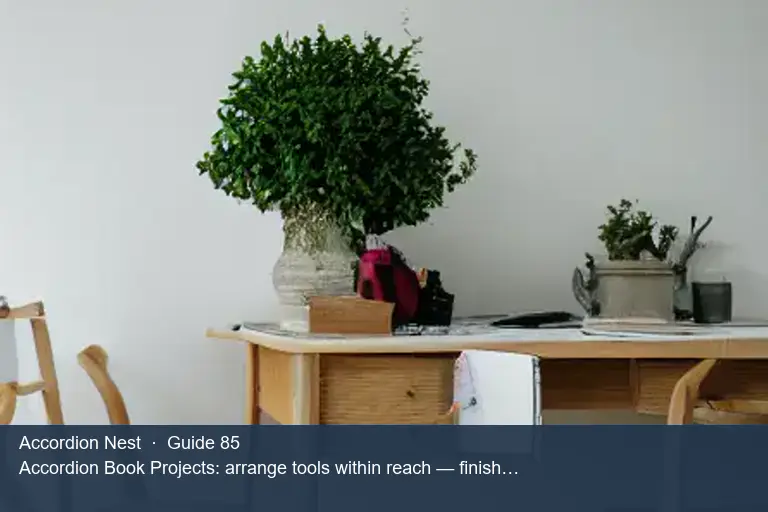
Accordion Book Projects: arrange tools within reach — finish criteria for a shared workspace; setup in small spaces
In the heart of your shared workspace, where creativity and collaboration are the hallmarks of your projects, a comfortable space for accordion book projects could be the perfect spot. This space is designed to be accessible and functional, allowing individuals to work in close proximity to one another. With a small space plan, you can create a collaborative environment where everyone has a place to contribute without being hindered by too much clutter. Here’s how you can organize and arrange tools within reach for accordion book projects, ensuring that your shared workspace is a place of shared effort and success.
### Setting Up the Space
To begin your accordion book project, you need to set up a small space plan in your shared workspace. This plan should include the following elements:
- **Available Space:** Identify the available space in your workspace. This could be a corner of the room, a specific desk, or a specific table. Make sure you have the necessary tools available within reach.
- **Tool Storage:** Determine the size and type of tools needed for your accordion book projects. For example, if you’re planning to create a series of books, you may need different types of books (e.g., novel, poetry, children’s stories) and different types of paper (e.g., thick, thin, and lightweight).
- **Tool Organization:** Organize the tools within reach. This can be done using shelves, bins, or a combination of both. Ensure that each tool is within easy reach and that it is not cluttered with too many items.
- **Tools Labels:** Label the tools clearly so that everyone knows what each tool is for. This will help in organizing and identifying the tools quickly.
### Organizing Tools Within Reach
Once you have set up the space, it’s time to organize the tools within reach. Here are some steps to follow:
- **Tools Clarity:** Ensure that each tool is clearly labeled. Tools like notebooks, binders, and paper should be labeled with their specific types (e.g., thick, thin, and lightweight).
- **Tools Organization:** Sort the tools into categories. For example, you could have a section for thick paper, a section for thin paper, and a section for lightweight paper.
- **Tools Storage:** Keep the tools organized in their respective categories. This will make it easier to find the specific type of paper or book you need.
- **Tools Usage:** Clearly label each tool with its intended use. For example, a book could be labeled with "Novel" or "Children's Story."
### Creating a Collaborative Environment
To create a collaborative environment where accordion book projects can thrive, you need to encourage collaboration and encourage teamwork. Here are some ways to promote collaboration within your shared workspace:
- **Team Naming:** Name each team member based on their area of expertise or interest. For example, you could name a team member based on their love for children’s books or their love for poetry.
- **Team Meetings:** Schedule regular team meetings to discuss projects, share ideas, and work on projects together.
- **Team Roles:** Assign specific roles within your team. For example, one team member could be responsible for writing the chapters, another for editing the chapters, and a third for adding illustrations.
- **Team Chats:** Encourage team chats to discuss projects, work on projects, and share ideas.
### Conclusion
By setting up a small space plan, organizing tools within reach, and promoting collaboration within your shared workspace, you can create a collaborative environment where accordion book projects can thrive. Remember to label the tools clearly, organize them correctly, and encourage teamwork to ensure that everyone has a place to contribute without being hindered by too much clutter. Your shared workspace is a place of shared effort and success, and your accordion book projects will be a joy to work on.